- Sale! ▾
- Wing ▾
- Foil ▾
- Kitesurf ▾
- Windsurf ▾
- SUP ▾
- More ▾
- Info ▾

Windsurfing combines a board with a mast and sail, connected by a flexible joint that allows the sail to move freely. The sail harnesses the wind to propel you across the water, while you control your direction and speed by adjusting the sail, shifting your body weight and using the board's edges.
Once you get the hang of the basics, you can sail upwind, turn around, build speed and explore a wide range of conditions.
Windsurfing is a hugely rewarding sport with plenty of room to progress. You can cruise on flat water in a light breeze, blast across the water at speed, jump over chop or take on the challenge of riding waves. It rewards good technique and time on the water, with new skills to discover as your confidence grows.
It's also a sport that can take you in many different directions, whether you enjoy exploring your local spot, the thrill of high-speed sailing or the challenge of mastering waves and aerial manoeuvres.
Windsurfing can be enjoyed in many places where there's suitable wind and water. For beginners, relatively flat water and steady winds of around 8–15 knots can provide a great starting point, provided the equipment is appropriate for the conditions.
With the right instruction and equipment, you can learn in a range of wind strengths, although stronger winds generally make controlling the sail more demanding.
Some conditions can make learning more challenging:
For beginners, a sheltered location with steady wind and relatively flat water is generally a great place to start. A suitable beginner board, often with a daggerboard for added stability and upwind performance, can also make a big difference.

Windsurfing can be relatively quick to pick up with the right equipment and instruction. Many beginners manage to stand on the board, lift the sail and start moving under their own power during their first lesson.
The initial skills include balancing on the board, lifting the sail from the water, finding the correct sailing position and learning how to steer by moving the sail. These basics can be surprisingly intuitive once everything starts to click.
The right equipment is important here. Large, stable beginner boards and manageable sail sizes make learning considerably easier than trying to start on equipment designed for advanced riders.
Being able to sail around is one thing; consistently sailing upwind and returning to your starting point is another.
This is an important milestone because it gives you more freedom to explore a sailing area without continually drifting downwind. It takes practice to develop the balance, sail control and technique needed to sail efficiently in both directions.
With suitable beginner equipment, good instruction and favourable conditions, some learners can make substantial progress within their first 5–10 hours on the water. However, the time required varies considerably with wind conditions, equipment, previous experience and practice frequency.
Once you can sail confidently in both directions, you'll have a solid foundation for exploring faster sailing, stronger winds and more advanced techniques.
This is where windsurfing becomes both incredibly rewarding and technically demanding.
Advanced disciplines such as wave riding, freestyle, jumping and slalom sailing require a high level of technique, timing and board control. Stronger winds and more challenging conditions can also make these disciplines physically demanding.
Progression often becomes slower as the skills get harder, but that's part of the appeal. There is always another manoeuvre to learn, another condition to master or another level of speed and control to work towards.
Whether you're chasing your first small jump, learning to carve a gybe at speed or heading out into waves, windsurfing offers a lifetime of progression for those willing to put in the time.
The table below gives a rough indication of how different riding styles fit into the progression from beginner to advanced.
These ratings are subjective and reflect the relative accessibility of each discipline at different skill levels, rather than how enjoyable it is. The right equipment and conditions can make a significant difference, and riders can enjoy different styles at almost any stage of their progression.
| beginner | intermediate | advanced | |
| freeride | ⭐⭐⭐⭐⭐ | ⭐⭐⭐⭐⭐ | ⭐⭐⭐⭐⭐ |
| wave riding | ⭐ | ⭐⭐ | ⭐⭐⭐⭐ |
| jumps | ⭐⭐ | ⭐⭐⭐⭐⭐ | ⭐⭐⭐⭐⭐ |
| big air | - | ⭐ | ⭐⭐ |
| freestyle | - | ⭐⭐ | ⭐⭐⭐⭐ |
| speed | ⭐⭐⭐⭐ | ⭐⭐⭐⭐⭐ | ⭐⭐⭐⭐⭐ |
Windsurfing can be physically demanding, particularly as you progress into stronger winds and more advanced disciplines.
Beginners need balance, coordination and stamina. Initially, lifting the sail out of the water repeatedly, recovering after falls and maintaining your sailing position can be surprisingly tiring. Your forearms, shoulders, back and core may all feel the effort, particularly while you're learning.
As your technique improves, you become more efficient and can spend less energy fighting the sail. Using the harness allows you to transfer much of the sail's pull through your body rather than relying entirely on your arms.
However, windsurfing generally remains a physically engaging sport. Stronger winds, larger sails, high-speed sailing, jumping and wave riding all place greater demands on your fitness and technique.
Of the wind sports covered in this guide, windsurfing can be one of the more physically demanding options, especially when you're learning or sailing in challenging conditions. The upside is that you can build your fitness progressively while developing your skills.
Windsurfing can be a great option if you want flexibility in when you get out on the water.
With the right equipment, you can enjoy a wide range of conditions. Light winds can be suitable for cruising on a large board with a bigger sail, while stronger winds allow for faster sailing and more advanced riding.
A beginner board with a daggerboard provides stability and helps you sail upwind, making it possible to get useful time on the water even when the conditions aren't ideal for smaller, high-performance equipment.
This flexibility can make it easier to fit sessions around work, family and other commitments, rather than waiting for a narrow set of conditions.
However, progressing into advanced riding styles and techniques takes commitment. If you're only able to get on the water occasionally, your progress may be slower, particularly when developing skills that depend on stronger winds or specific wave conditions.
The good news is that even a short session can be worthwhile. Consistent practice, appropriate equipment and gradually challenging yourself are the keys to long-term progression.
Lessons are highly recommended for beginners.
Although windsurfing can be relatively intuitive to start, a qualified instructor can help you learn the correct techniques, understand wind direction, choose suitable conditions and avoid developing habits that make progression harder later.
Lessons can also help you select the right equipment for your size, ability and local conditions, making those first sessions considerably more enjoyable.
Check out our recommended lesson providers below:
Before booking, check the school's current availability, lesson format, equipment inclusions and recommended conditions.
Choosing the right equipment makes a huge difference to your windsurfing experience, especially when you're starting out.
At SHQ, we've made beginner gear selection as straightforward as possible. Our beginner-friendly packages are designed to help you get the right equipment for your needs without having to navigate every technical detail yourself.
The main things to consider are:
You don't need the latest high-performance gear to get started. In fact, equipment designed to be stable, forgiving and easy to use will generally help you learn faster and enjoy your sessions more.
At SHQ, we've put together beginner-friendly packages to make finding the right setup as easy as possible.
Check out the packages below for our recommendations, or give us a call on 03 9598 2867. We'd love to help you find a setup tailored to your weight, experience, local conditions and budget.
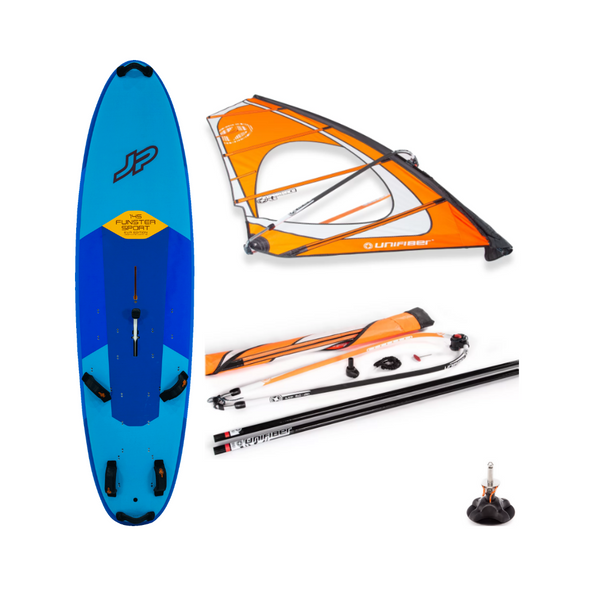
$3,750.00 $4,290.00
This is a great value windsurf package to suit a complete beginner to intermediate rider....

$4,590.00 $5,560.00
This is a great value windsurf package to suit a complete beginner to intermediate rider....

$4,390.00 $5,724.00
This is a great value windsurf package to suit a complete beginner to intermediate rider....
Subscribe to our newsletter and always be the first to hear about what is happening.

© 2026 SHQ Boardsports. Sunshine Coast Boardsports